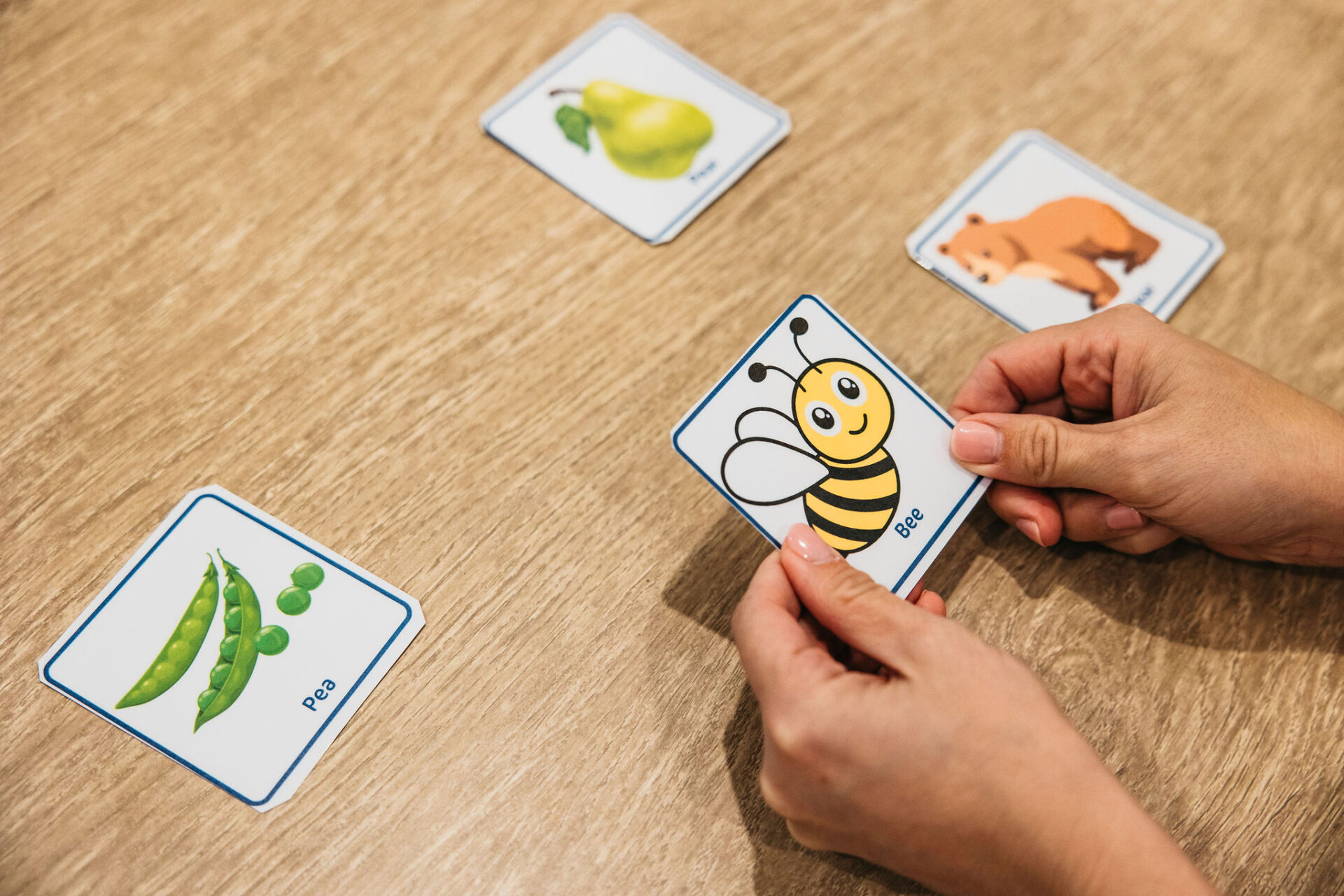
Syllables are the “beats” in words, and learning to hear them can make speech and early reading much easier. In this blog, we explain what a syllable is with simple examples, why syllable awareness matters for clear pronunciation, spelling, and decoding longer words, and how you can practise it in everyday play. You’ll find easy activities for counting syllables (clapping, jumping, tapping), blending syllables back into full words (like “robot talk”), exploring open and closed syllables, and helping children who drop weak syllables in longer words (e.g., “nana” for “banana”).
What is a syllable?
A syllable is a part of a word that is pronounced as a whole unit. Syllables within the English language always contain a single vowel sound (this sound can be written with more than one vowel, but is just a single sound). Words can either be monosyllabic (only one syllable) or multi/polysyllabic (containing more than one syllable). A syllable can either be a whole stand-alone word (e.g. cat), or can be parts of a whole word that cannot stand alone (e.g. mon-key (2 syllables), bi-cy-cle (3 syllables), and ca-ter-pi-llar (4 syllables)). Whole-word syllables can also be combined to create a new multisyllabic word, for example, ‘cow-boy’ is two whole-word syllables that can combine to make the word ‘cowboy’.
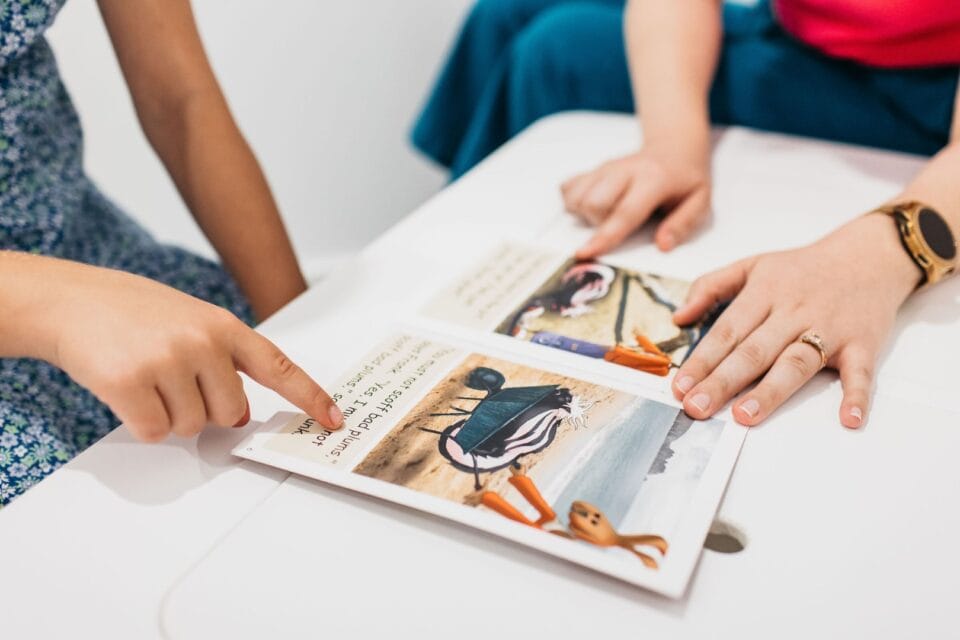
But why is it important for children to learn about syllables?
Syllable awareness is an important component of speech and language development and is crucial for mastering spelling and reading. Syllables can help us to break longer and more complicated words down into more manageable bite-sized parts which can make sounding-out and learning to read easier and less overwhelming. Phonological awareness, which includes syllable knowledge, helps children develop strong literacy skills. Similarly, understanding syllables can support the development of correct speech sound production (e.g. supporting children to say all syllables within a word) and to learn how to appropriately emphasise different components of words to help with expression (e.g. prosody and intonation). By practising syllable activities, parents can support their child’s speech, language and literacy growth and subsequently the development of confidence in their communication.
Syllable Awareness and Identification Activities
Building awareness of and recognising syllables within words allows children to develop essential phonological awareness and literacy skills. Counting syllables also helps children with word segmentation, which is a skill required for early literacy development. Consistent exposure to syllable segmentation activities helps children build confidence in their speech and reading abilities.
- Jumping Syllables: Say a word and have your child jump for each syllable.
- Finger Tapping: Tap fingers while saying each syllable aloud.
- Drum Beats: Beat a drum or clap to match the syllables in a word.
- Visual Cues: Use blocks or counters to represent syllables in spoken words.
- Syllable Puzzles: Cut pictures into syllabic parts and have children piece them together while saying the word.
- Hand Under Chin: Have children place a hand under their chin and feel the movement for each syllable.
- Musical Syllables: Play music and pause after a word, asking children to count the syllables.
- Rhyme Time: Give a word and have children find another word with the same number of syllables (e.g. a rhyming word).
- Syllable Toss: Toss a ball back and forth, saying one syllable per throw.
- Storytime Count: Read aloud and have children clap out the syllables in words.
Making these exercises part of daily conversations and reading routines provides a consistent way to practise syllable awareness.
Open and Closed Syllable Activities
Open syllables end in a vowel, like “me,” while closed syllables end in a consonant, like “bat.” Recognising these patterns helps with reading and spelling. Some activities that help support a child’s understanding of open and closed syllables include:
- Syllable Sorting: Write words on cards and ask children to place them into open or closed categories.
- Word Hunt: Find open and closed syllables in books and highlight them.
- Magnetic Letters: Use letters to create open and closed syllables.
- Word Expansion: Change open syllables to closed by adding a consonant (e.g., “me” to “meet”).
- Flashcard Game: Show words and have children identify whether they contain open or closed syllables.
These activities encourage children to explore word structures in a hands-on way. Understanding open and closed syllables enhances reading fluency and spelling accuracy. Parents can incorporate these games into daily reading time to reinforce phonological awareness and make learning engaging.
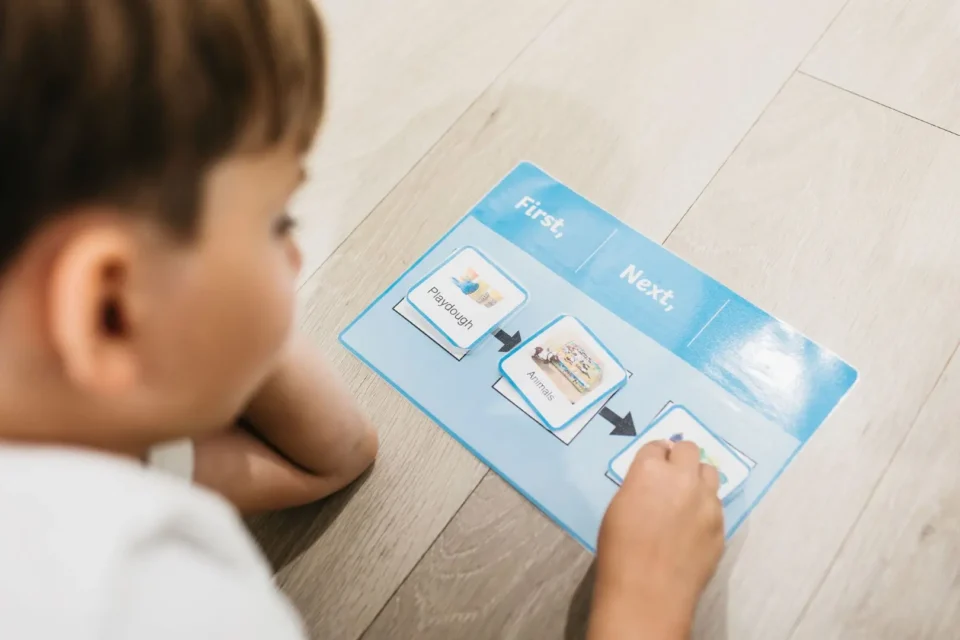
Syllable Blending Activities
Blending syllables helps children form complete words from segmented sounds, which is an important skill for reading.
- Robot Talk: Say a word in syllables with a robotic voice and have children guess the full word.
- Mystery Word: Give syllables separately (e.g., “sun – shine”) and have your child say the word.
- Picture Matching: Say syllables and ask your child to find the corresponding image.
- Roll the Dice: Write syllables on dice, roll them, and blend them to create words.
- Treasure Hunt: Hide objects around the house and say syllables as clues to their location.
Helping children blend syllables builds phonological awareness and improves their ability to decode and encode new words. By engaging in structured activities, children gain confidence in listening to and combining sounds, an important skill for early literacy development.
Weak Syllable Deletion Activities
Children learning to pronounce longer words may omit weak syllables. For example, they might say “nana” instead of “banana.” Encouraging them to notice and pronounce these missing syllables can improve their speech clarity.
- Clap It Out: Clap once for each syllable to highlight the rhythm of words.
- Toy Tap Game: Place a toy on the table and tap it for each syllable.
- Say It Back: Model a full word and ask your child to repeat it, emphasising the missing syllable.
- Picture Sorting: Use pictures of objects with different syllable counts and have your child group them accordingly.
- Sing Along: Songs with repetitive phrases help reinforce syllable patterns.
These activities create a structured yet enjoyable way for children to recognise weak syllables. By reinforcing pronunciation through movement and repetition, children develop a better grasp of syllable structures within words which can subsequently improve their own pronunciation of longer words. Parents can incorporate these activities into everyday play to support their child’s speech development.
Additional Syllable Activities
To further reinforce syllable awareness, incorporate hands-on learning methods:
- Bean Bag Toss: Toss a bean bag for each syllable.
- Hopping Words: Hop forward for each syllable in a spoken word.
- Lego Syllables: Use Lego bricks to represent syllables.
- Sticker Sorting: Match words to stickers with corresponding syllable counts.
- Chalk Words: Write words outside and jump on each syllable while saying them aloud.
These additional exercises provide varied ways to engage children in syllable learning. By integrating movement, play, and repetition, children develop speech and reading skills in an enjoyable and natural way. Interactive activities that require movement and auditory feedback, are a great way to support engagement in learning tasks and to help target a range of goals, such as syllable awareness skills.
Encouraging Language Growth Through Play
Syllable activities help children develop phonological awareness skills, an important foundation of literacy. Engaging in daily play-based exercises allows children to hear, recognise, and manipulate syllables in ways that feel natural and enjoyable. Whether through movement, rhythm, or interactive games, these experiences strengthen pronunciation, reading readiness, and overall communication skills.
Parents can integrate these activities into everyday routines, such as singing, storytelling, and playtime. Encouraging children to listen for syllables, blend sounds, and break words into parts supports their speech and literacy development and confidence in communicating. By fostering a playful and consistent approach, children gradually refine their phonological awareness, making reading and verbal expression easier.
If a child continues to struggle with syllables, consider seeking guidance from a Speech Pathologist who can provide personalised support. With patience and engaging activities, children can develop the skills they need to communicate effectively and approach language with enthusiasm.
FAQs
What age should children start learning about syllables?
Most children begin developing syllable awareness between the ages of 3 and 5. This skill typically emerges as they start noticing rhythms in words and songs. By school, children should be able to clap or tap out syllables in simple words. Encouraging play-based activities can help children develop this awareness naturally.
Why is syllable awareness important for reading and speech?
Syllable awareness helps children break words into manageable parts, making it easier to decode unfamiliar words while reading. It also improves pronunciation and speech clarity. Strong phonological skills, including syllable segmentation and blending, support early literacy and communication development.
How can I make syllable activities fun for my child?
Using movement-based games, songs, and interactive play keeps syllable activities engaging. Clapping, jumping, or using toys to represent syllables makes learning hands-on. Incorporating favourite books and songs also encourages participation and enjoyment.
What should I do if my child struggles with syllables?
If your child has difficulty recognising syllables, start with simple activities like clapping syllables in their name. Use visual and tactile cues, such as tapping fingers or using counters. If difficulties persist, consulting a Speech Pathologist can provide additional support.
Are syllable activities beneficial for all children?
Yes, syllable activities benefit all children, especially those learning to read, developing speech, or with language delays. These activities build phonological awareness, which is foundational for literacy and communication skills.
How often should we practise syllable activities?
A few minutes of practice each day is enough to reinforce learning. Integrating syllable games into daily routines, such as reading time or play, helps children develop these skills naturally and consistently.