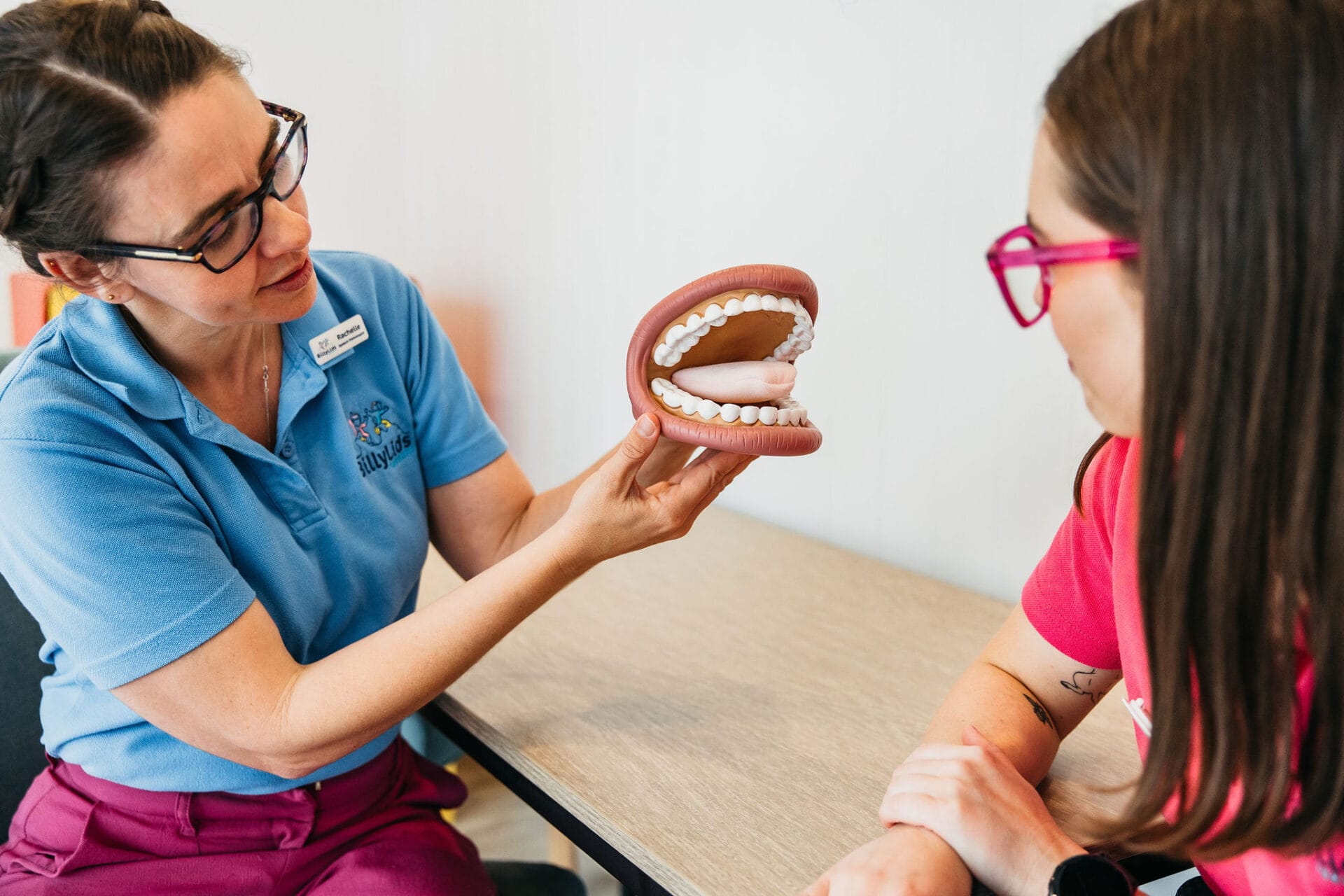
A lisp is a common speech sound difficulty that affects how certain sounds are produced, particularly “s” and “z.” While some lisps are a normal part of early speech development, others can persist and impact a child’s clarity and confidence. Understanding the different types of lisps and when they typically resolve can help parents know what’s expected and when support may be needed. This guide explains lisps in simple terms and outlines how speech pathology can help.
What is a lisp?
A Lisp is an articulation disorder, which refers to errors in the physical production of speech sounds based on the ways we use our lips, mouth and tongue. Essentially, a lisp is a difficulty in accurately pronouncing sounds, including: /s/, /z/, ‘sh’, ‘ch’, ‘zh’ and ‘dge,’ due to errors in phonetic placement (e.g. placement of the tongue, lips, etc.) during production. Lisps are often an articulation disorder of a functional nature, with no known cause, however structural differences and abnormalities of the mouth can often contribute to the severity of a lisp. Dental issues (such as misalignment of teeth), jaw abnormalities (such as an undersized jaw) and palate shape, can all impact the articulatory precision required to produce accurate sounds.
What is a Frontal Lisp?
A frontal lisp is a speech sound pattern that occurs when a child produces a fricative or affricate sound (e.g. /s/, /z/, ‘sh’, ‘ch’, ‘zh’ and ‘dge’) incorrectly by pushing the tongue forward against the teeth or even sticking it out between the teeth. For example, this causes the sound to be more like a “th” rather than a sharp and clear “s.” It’s a common speech error for younger children and is often seen as part of the natural development of speech, particularly as they are learning to speak. A frontal lisp can resolve on its own as children grow older and their oral muscles strengthen, however it does not always.
As children grow, their speech patterns become more refined, and they usually learn to position their tongues correctly for clearer articulation of sounds. A lisp can sometimes persist beyond the expected age range, and may require intervention. For families, a lisp can be challenging, as it may lead to communication challenges at school or within social situations. Parents might feel unsure about when to seek help or how to support their child best. This is where speech pathology plays a crucial role. Speech therapists play an important role in helping children learn to position their tongue correctly while speaking, ensuring more accurate sound production. Through targeted exercises and consistent practice, children can correct their tongue positioning, which helps eliminate the lisp over time.
Speech Pathology is key for improving a child’s speech, building their confidence, and ensuring they can communicate clearly with others. Understanding that a frontal lisp is a developmental phase rather than a permanent condition can ease parents’ concerns and help them approach the situation with patience. By recognising the signs early and seeking appropriate help, parents can guide their child toward clearer speech and stronger social interactions.
Frontal Lisp: Age of Elimination
A frontal lisp is something that young children might grow out of naturally as they develop more precise speech patterns. By the age of 4 and a half, many children have learned to position their tongue properly for the production of /s/, /z/, ‘sh’, ‘ch’, ‘zh’ and ‘dge’ sounds. However, if a lisp persists beyond this age, it indicates the need for professional help.
Speech therapy is often recommended when a frontal lisp remains after early childhood (past the age of 4-4.5 years), as this can help children correct their tongue placement and develop clearer speech. It’s important to keep in mind that each child is different, and while some may outgrow a frontal lisp early, others may need a little extra help to eliminate it fully. A Speech Pathologist can provide an assessment and guide parents on the best course of action based on the child’s specific needs.
Lateral Lisp vs Frontal Lisp vs Palatal Lisp
Frontal Lisp
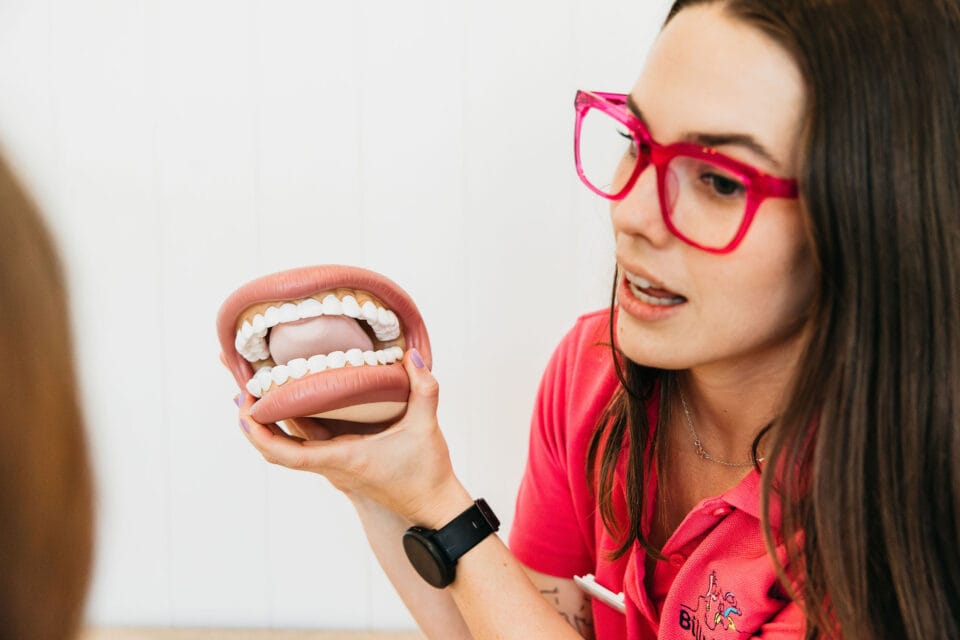
Frontal lisps involve the tongue protruding between the teeth when producing fricative or affricate sounds (e.g. /s/, /z/, ‘sh’, ‘ch’, ‘zh’ and ‘dge’). This results in a softer or more “th”-like sound. A frontal lisp can be further classified as either interdental (where the tongue protrudes between the teeth) or dentalised (where the tongue presses against the back of the teeth). As children are learning to talk, it’s not unusual for them to place their tongue forward. Still, when this persists beyond early childhood (4-4.5 years of age), therapy is likely required to help them correct their tongue placement. Unlike the lateral lisp, a frontal lisp is generally easier to spot, as the tongue is visibly positioned incorrectly during speech.
Lateral Lisp
A lateral lisp occurs when air is directed over the sides of the tongue rather than out through the front of the mouth. This typically happens because the tongue is too far back in the mouth or is incorrectly positioned against the roof of the mouth. The resulting sound is usually a “slushy” or “wet” version of the /s/, /z/, ‘sh’, ‘ch’, ‘zh’ and ‘dge,’ sounds, which can be more difficult to understand. Lateral lisps are less common than frontal lisps but can be just as concerning for parents, as they often require targeted therapy to address tongue placement and airflow. Lateral lisps are classed as an atypical speech sound error, as they are not expected to occur within typical speech sound development.
Palatal Lisp
A palatal lisp occurs when the middle of the tongue touches the roof of the mouth (soft palate) when producing a fricative or affricate sound (e.g. /s/, /z/, ‘sh’, ‘ch’, ‘zh’ and ‘dge’). This makes it difficult for air to escape from the mouth and causes the sound to come across as muffled. Like a lateral lisp, a palatal lisp is not a developmental speech sound error, and is not expected within typical speech sound development.
How They Differ or Are Similar
While all types of lisps affect the production of /s/, /z/, ‘sh’, ‘ch’, ‘zh’ and ‘dge,’ the key difference lies in where the tongue is positioned. A frontal lisp involves the tongue pushing forward against the teeth or sticking out past the teeth, whereas a lateral lisp is characterised by air being directed out the sides of the mouth, and a palatal lisp involves the middle of the tongue pressing against the roof of the mouth. All types can affect a child’s ability to produce clear, understandable speech, and can benefit from speech therapy. While a frontal lisp is often part of normal speech development, a lateral or palatal lisp is less common and may require more focused intervention.
Supporting Your Child Through Speech Therapy
Supporting your child through their speech development journey can feel overwhelming at times, especially when dealing with an articulation difficulty like a lisp. It’s important to remember that speech patterns are a natural part of speech development, and some children might outgrow a frontal lisp with time, however, if the lisp persists, speech therapy can be incredibly effective in helping your child develop clearer speech, articulation and potentially reduce anxiety in children.
A Speech Pathologist can assess your child’s speech and guide you through helpful strategies and activities to improve their sound production. It’s essential to be patient and supportive, as speech changes can take time. By providing a nurturing environment and consistent practice, you can help your child overcome a lisp and develop stronger communication skills that will serve them well throughout their lives.
FAQs
What is a frontal lisp?
A frontal lisp occurs when a child pronounces the /s/, /z/, ‘sh’, ‘ch’, ‘zh’ and ‘dge’ sounds by pushing the tongue forward against or between the teeth, resulting in a softer or “th”-like sound. This speech pattern is common in early childhood but may persist if not addressed.
At what age should a frontal lisp be addressed?
While some children may naturally outgrow a frontal lisp, it’s advisable to seek speech therapy if the lisp persists beyond the age of 4-4.5 years. Early intervention can prevent the habit from becoming ingrained, making correction more challenging later on.
How does a frontal lisp affect a child’s communication?
A frontal lisp can make speech less intelligible, leading to misunderstandings and frustration. This may impact a child’s confidence and social interactions, as peers might find it difficult to understand them. Addressing the lisp can enhance clarity and boost self-esteem.
Can a frontal lisp be corrected without professional help?
While some children may outgrow a frontal lisp, many require guidance from a Speech Pathologist to correct tongue placement and improve sound production. Professional intervention ensures that the lisp is addressed effectively, leading to clearer speech.
What techniques do Speech Pathologists use to treat a frontal lisp?
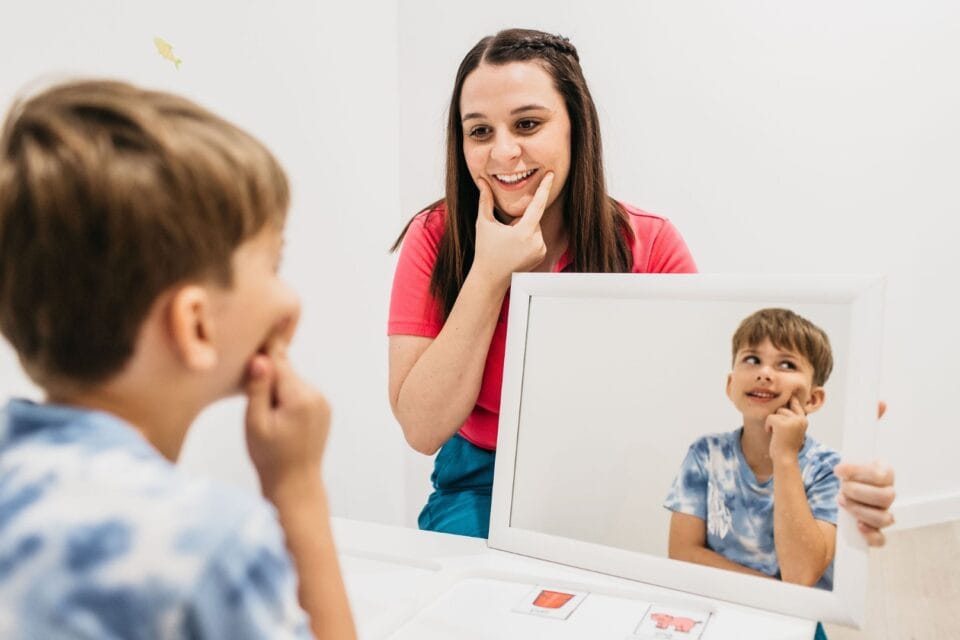
Speech Pathologists employ various strategies, including visual cues, tactile feedback, and specific exercises to teach correct tongue placement. These methods are tailored to each child’s needs, ensuring effective treatment. The articulation hierarchy is a structured progression used in speech therapy that moves from practicing a sound in isolation, to syllables, words, phrases, sentences, and finally spontaneous conversation. The articulation hierarchy will be used as a guide within speech therapy to ensure that a child masters a sound for consistent use in everyday speech.