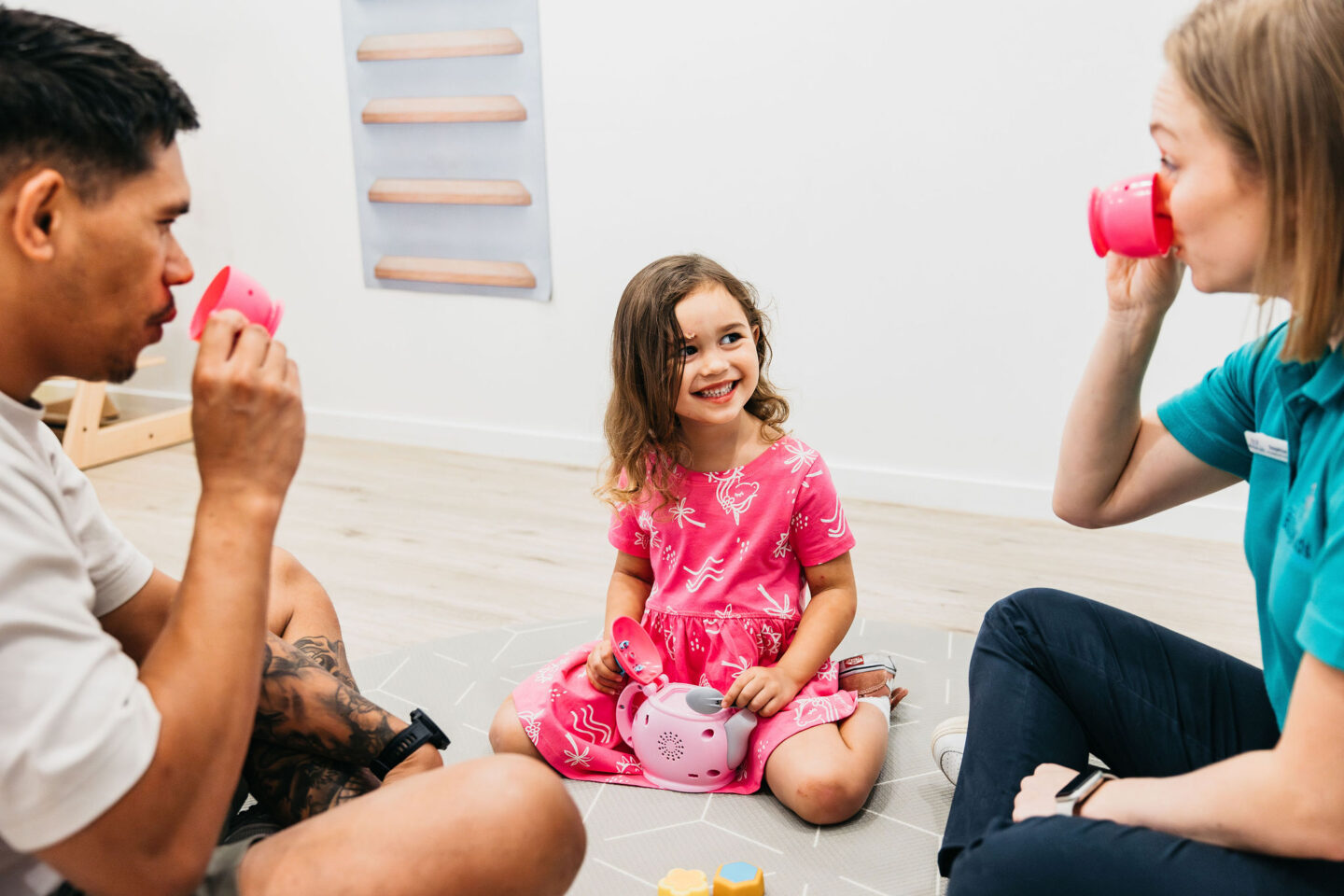
BillyLids Therapy partners with Early Learning Centres and Kindergartens to support children under 10 through collaborative, play-based Speech Pathology and Occupational Therapy. We work alongside educators to minimise disruption to the day, align with your routines and centre philosophy, and provide practical strategies that fit naturally into group settings. Where helpful, we can attend case conferences or joint planning meetings with families and your team to keep goals and support consistent across environments.
Download Full post
Welcome
Welcome, and thank you for taking the time to learn more about BillyLids Therapy.
We are Rachelle and Rosanna, sisters and co-founders of BillyLids Therapy. Rachelle is a Speech-Language Pathologist and Rosanna is an Occupational Therapist. We grew up in Brisbane and have both spent our professional lives working with children and families across this community. Being sisters and working closely together shapes the way we practise, with a strong focus on collaboration, continuity, and understanding the environments children learn and grow within.
BillyLids Therapy was created to provide playful, ethical, and empowering care for children under 10. We believe therapy in the early years should be engaging and purposeful, grounded in evidence, and responsive to each child as an individual. Our integrated Speech Pathology and Occupational Therapy approach allows us to support children holistically across communication, regulation, independence, and participation in everyday life.
We hold deep respect for early learning educators and the vital role you play in children’s development. Education has been part of our family across generations. Our mother, grandfather, and great grandmother were all educators, and this has shaped our appreciation for the professionalism, insight, and care required in early learning settings. We value educators’ knowledge of children and see our role as working alongside you, not separately from you.
We look forward to partnering with your team to support children to grow, learn, and thrive.
About BillyLids Therapy
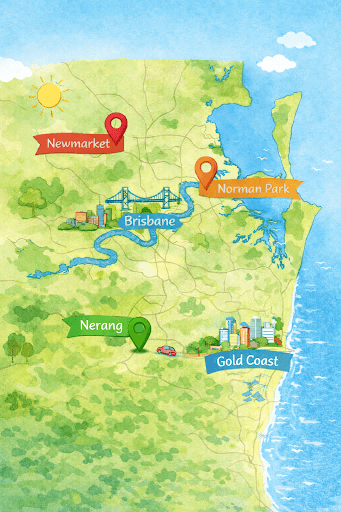
BillyLids Therapy is a family-run paediatric Speech Pathology and Occupational Therapy service supporting children and families across Brisbane and the Gold Coast. We are based in Newmarket and Norman Park in Brisbane, and in Nerang on the Gold Coast, and work exclusively with children under 10 years of age.
Our practice is primarily clinic based, allowing us to provide therapy in consistent environments with access to specialist equipment and resources. Where appropriate, we also support children in their everyday environments, including at home, in daycare, and in kindergarten settings. We believe meaningful progress occurs when therapy is connected to a child’s real world, and we work thoughtfully to ensure strategies can be carried over across settings in collaboration with families and educators.
Our approach is play-based, child-centred, and evidence-informed. We aim to create therapy sessions that feel engaging and purposeful, while supporting children’s communication, regulation, motor development, independence, and participation in everyday activities.
BillyLids Therapy operates through a collaborative practice model, with Speech Pathologists and Occupational Therapists working closely together. We are also deeply committed to quality care and clinician wellbeing. Our therapists work with manageable caseloads, typically seeing four to five clients per day, with protected breaks and strong supervision structures in place. We believe this supports thoughtful practice and leads to better outcomes for children, families, and educators.
Our Locations
Our clinics are designed to be welcoming, child-friendly spaces with access to specialist equipment. We support children and families across Brisbane and the Gold Coast.
Newmarket (Brisbane)
BillyLids Therapy
76 Enoggera Road
Newmarket QLD 4051
Norman Park (Brisbane)
BillyLids Therapy
Level 1, 172 Bennetts Road
Norman Park QLD 4170
Nerang (Gold Coast)
BillyLids Therapy
1 Station Street
Nerang QLD 4211
Main reception: (07) 5606 4076
Email: gday@billylidstherapy.com.au
Website: www.billylidstherapy.com.au
Understanding Speech Pathology and Occupational Therapy
Speech Pathologists and Occupational Therapists play complementary roles in supporting children’s development, participation, and wellbeing during the early years. While each profession has a distinct focus, both work together to support children to engage meaningfully in everyday activities at home, in early learning settings, and in the wider community.
Speech Pathology focuses on children’s communication and feeding skills. This includes how children understand and use language, produce speech sounds, interact socially, and develop the foundations for literacy. Speech Pathologists also support children who stutter and those experiencing feeding or mealtime challenges. Strong communication skills underpin learning, relationships, and participation across all early childhood settings.
Occupational Therapy focuses on children’s ability to participate in daily activities through the development of motor skills, sensory regulation, emotional regulation, and independence. Occupational Therapists support children to use their bodies effectively, manage sensory input, develop self-care skills, and build the foundational skills needed for learning and play.
At BillyLids Therapy, Speech Pathologists and Occupational Therapists work collaboratively to support the whole child. This integrated approach allows us to consider communication, regulation, movement, and independence together, recognising that development is interconnected and best supported through consistent, play-based, and meaningful experiences.
Speech Pathology
Areas We Support:
Early language
Supporting children to understand and use words, sentences, and concepts to communicate their needs, ideas, and experiences.
Speech sounds
Helping children develop clear speech by supporting accurate production of sounds and sound patterns.
Play skills
Building symbolic play, turn-taking, and shared attention skills that support language, learning, and social development.
Social communication
Supporting skills such as joint attention, conversation, perspective-taking, and interaction with peers and adults.
Stuttering
Providing evidence-based support for children who stutter, with a focus on confidence, communication, and family education.
Feeding
Supporting children with feeding challenges, including sensory, oral-motor, and mealtime participation. BillyLids has SOS-trained therapists.
Augmentative and Alternative Communication (AAC)
Supporting children who use or may benefit from AAC, including gesture, key word sign, picture-based systems, and high-tech communication devices, to ensure every child has a functional way to communicate.
Early literacy and pre-literacy
Developing foundational skills for reading and writing, including sound awareness, vocabulary, narrative, and print awareness.
Occupational Therapy
Areas We Support:
Sensory processing and regulation
Helping children understand and respond to sensory input to support attention, emotional regulation, and participation.
Emotional regulation:
Developing skills to recognise, manage, and express emotions in age-appropriate and functional ways.
Play skills:
Helping children to build their skills in pretend play, playing with others, problem solving and independence in occupying themselves.
Toileting and self-care
Supporting independence with toileting, dressing, feeding routines, and other daily living skills.
Postural control and upper limb skills
Supporting children to build hand dominance and laterality, coordination between left and right side of body, and postural strength in support of fine motor development.
Fine motor skills
Building the foundational motor and visual skills required for drawing, pre-writing, cutting, and early classroom participation.
Feeding
Supporting children with feeding challenges focusing on sensory tolerance, positive mealtime experiences, and gradual skill development in a supportive and family-centred way.
Assistive technology
Exploring tools, strategies, and environmental adaptations that support access, independence, and participation.
When to Refer to BillyLids Therapy or Allied Health
Early identification and support can make a meaningful difference for children in the early years. Educators are often the first to notice when a child may be finding aspects of communication, regulation, movement, or participation more challenging than expected for their age. Referral to allied health does not require a diagnosis and may be appropriate when concerns are ongoing, impacting participation, or causing frustration for the child or their caregivers.
Around 24 Months / 2 Years
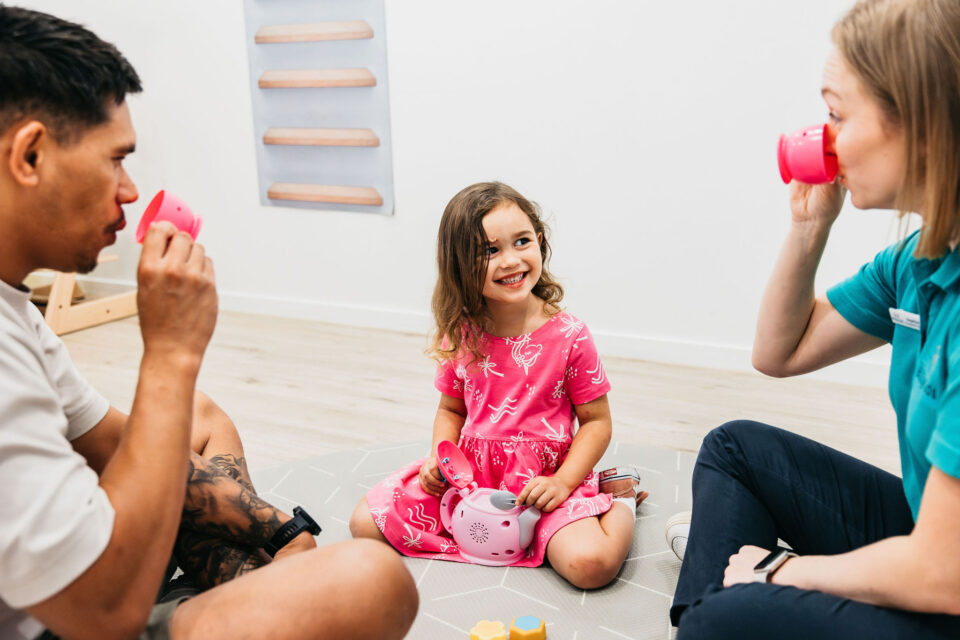
Early support around two years can be helpful when a child is not yet developing expected communication, play, or participation skills, or when everyday routines feel consistently challenging.
🚩 Red Flags
Speech Pathology
- Limited use of words or not yet using words meaningfully
- Difficulty understanding simple instructions
- Limited use of gestures such as pointing, showing, or waving
- Reduced interest in interaction, imitation, or shared play
- Frustration related to difficulty communicating
- Feeding concerns such as strong food aversions or difficulty progressing with textures
What this might look like
- A child uses sounds or gestures instead of words to communicate
- Limited response when their name is called or when given simple directions
- Play is repetitive or solitary with little shared attention
- Mealtimes are stressful or very restricted
Occupational Therapy
- Sensory sensitivities impacting play, routines, or mealtimes
- Delays in gross motor skills such as walking, climbing, or balance
- Limited use of hands during play
- Difficulty engaging in everyday routines
What this might look like
- A child avoids certain textures, sounds, or movements
- Difficulty joining floor play or outdoor activities
- Strong reactions to transitions or changes in routine
- Play is repetitive or solitary with little shared attention
Ages and Stages Questionnaire (ASQ-3) – 24 Months
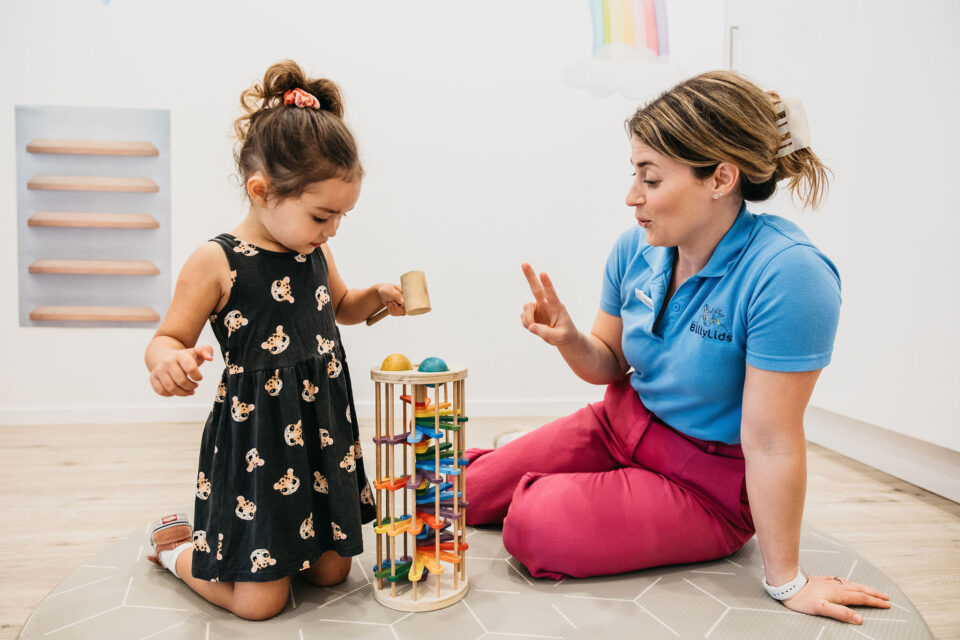
The ASQ-3 is a developmental screening tool used with children aged 23 months 0 days to 25 months 15 days. It is typically completed by parents or caregivers, often with support from educators or clinicians, and takes approximately 10–15 minutes to complete.
At 24 months, the ASQ-3 screens development across communication, gross motor, fine motor, problem solving, and personal–social skills.
The ASQ-3 is a screening tool, not a diagnostic assessment. Results should always be interpreted alongside observations from families and educators and followed up with further assessment if concerns are identified.
Around 36 Months / 3 Years
By three years, children are typically communicating using short sentences, engaging in pretend play, and participating more in group experiences.
🚩 Red Flags
Speech Pathology
- Speech that is difficult for unfamiliar adults to understand
- Limited sentence use or difficulty expressing ideas
- Reduced pretend play skills
- Challenges interacting with peers
- Ongoing feeding concerns
What this might look like
- Educators frequently need to interpret a child’s speech
- The child relies on adults rather than peers to communicate
- Limited role play or imaginative play
- Difficulty joining group activities
Occupational Therapy
- Sensory regulation difficulties affecting attention or participation
- Delays in fine or gross motor skills
- Difficulty with transitions or routines
- Frustration with early self-care tasks
- Difficulty with play skills
What this might look like
- Difficulty or disinterest for joining for group time
- Avoidance of messy play or fine motor activities
- Emotional responses that seem bigger than expected for the situation
- Difficulties with toilet training – they might be fearful or avoidant of the toilet, or experiencing constipation.
- During free play time, tending to move quickly or wander from one activity to another without playing with interest. May have specific play interests like lining up cars or blocks, or might interfere with other children’s play (eg. knock over kids buildings).
Ages and Stages Questionnaire (ASQ-3) – 36 Months
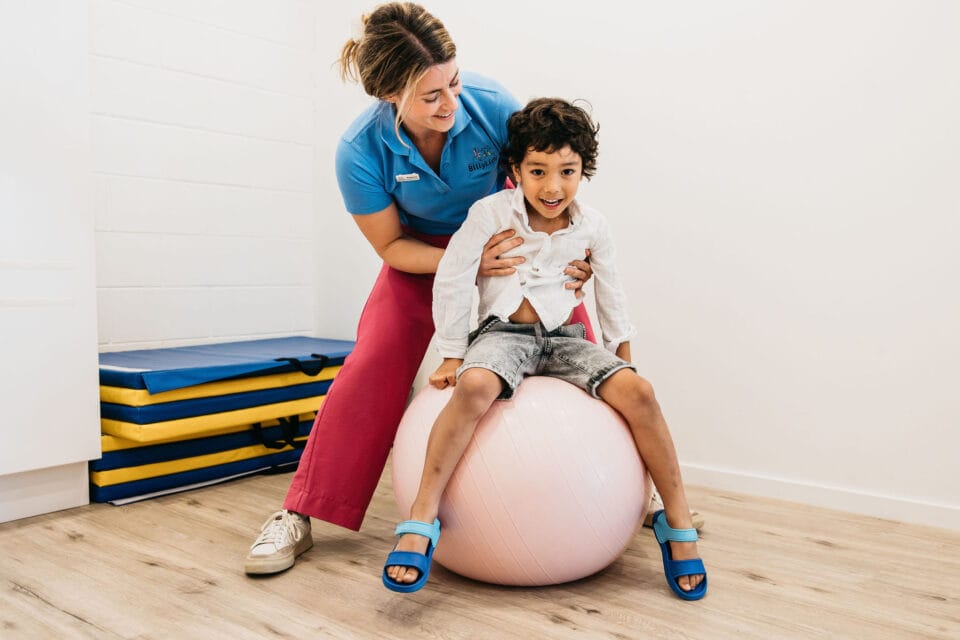
The ASQ-3 is a developmental screening tool used with children aged 34 months 16 days to 38 months 30 days. It is typically completed by parents or caregivers, often with support from educators or clinicians, and takes approximately 10–15 minutes to complete.
At 36 months, the ASQ-3 screens development across communication, gross motor, fine motor, problem solving, and personal–social skills.
The ASQ-3 is a screening tool, not a diagnostic assessment. Results should always be interpreted alongside observations from families and educators and followed up with further assessment if concerns are identified.
Download the 36 month ASQ here.
Around 48 Months / 4 Years
At four years, children are often preparing for kindergarten or school and are expected to participate more independently in group learning environments.
🚩 Red Flags
Speech Pathology
- Ongoing concerns with speech clarity
- Difficulty understanding or following group instructions
- Challenges with social communication and peer relationships
- Early concerns related to pre-literacy skills
What this might look like
- The child is frequently misunderstood by peers
- Difficulty answering questions or following multi-step instructions
- Challenges joining conversations or group play
Occupational Therapy
- Difficulties with fine motor skills such as drawing or cutting
- Emotional regulation difficulties
- Sensory sensitivities such as difficulty coping with noise, different textures or being close to others.
- Difficulty playing imaginatively or with others.
- Sensory seeking that impacts on participation, such as jumping and crashing, making unsafe movement choices, or difficulty sitting for periods.
- Concerns with toileting or independence
What this might look like
- Avoidance of table-top tasks
- Difficulty managing emotions during group activities
- Fatigued or overwhelmed in noisy or busy settings
- Very active or impulsive
- Difficulty playing with others
- General concerns about school readiness
Ages and Stages Questionnaire (ASQ-3) – 48 Months
The ASQ-3 is a developmental screening tool used with children aged 45 months 0 days to 50 months 30 days. It is typically completed by parents or caregivers, often with support from educators or clinicians, and takes approximately 10–15 minutes to complete.
At 48 months, the ASQ-3 screens development across communication, gross motor, fine motor, problem solving, and personal–social skills.
The ASQ-3 is a screening tool, not a diagnostic assessment. Results should always be interpreted alongside observations from families and educators and followed up with further assessment if concerns are identified.
Download the 48 month ASQ here.
How We Work with Daycares and Kindergartens
At BillyLids Therapy, we value strong, respectful partnerships with early learning centres and kindergartens. Educators bring deep knowledge of the children in their care, and we see our role as working alongside you to support children’s development in ways that align with your centre’s philosophy, routines, and learning environment.
Our approach is collaborative and flexible. When working with children who attend early learning settings, we are mindful of the flow of the day and aim to minimise disruption, aiming to avoid interrupting key learning blocks wherever possible. We respect centre routines, transitions, and teaching priorities, and work with educators to determine the most appropriate and least disruptive way to support each child.
Where helpful, we are able to attend case conferences or joint planning meetings with educators and families. These meetings provide an opportunity to share observations, align goals, and support consistency across settings.
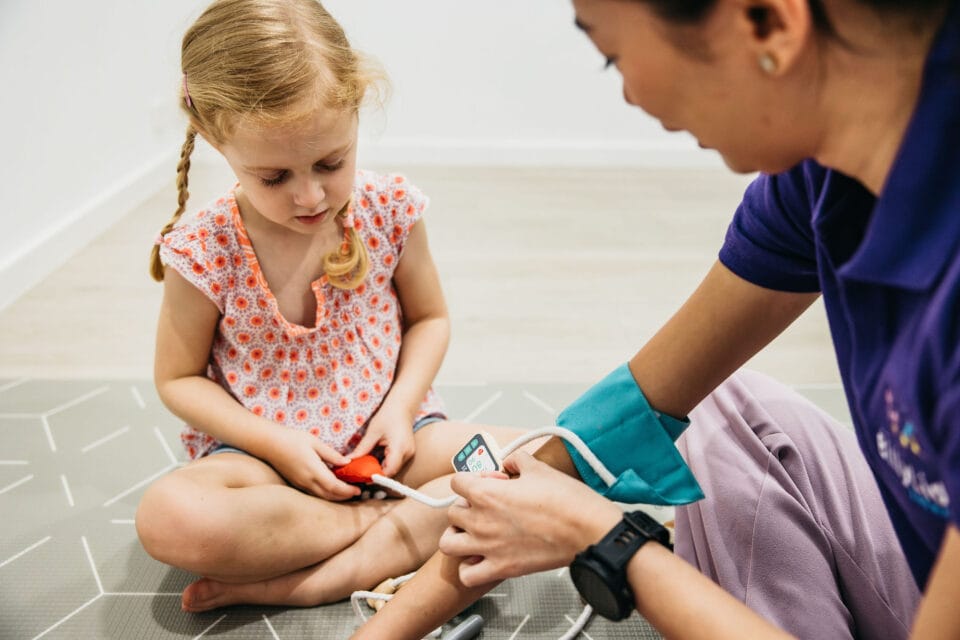
We are also able to provide practical, easy-to-implement strategies that educators can use within group settings and daily routines. These strategies are designed to support communication, regulation, participation, and independence in ways that feel natural within the classroom context.
Funding Options
There are several pathways families may use to access Speech Pathology and Occupational Therapy services. Funding options depend on a child’s age, needs, and individual circumstances. The information below provides a general overview of the most common funding pathways used by families accessing BillyLids Therapy.
NDIS
NDIS funding refers to financial support provided through the National Disability Insurance Scheme, a government funded program in Australia. Funding is allocated to eligible participants based on individual needs, goals, and circumstances and may be used to support services such as Speech Pathology and Occupational Therapy.
BillyLids Therapy is able to accept children who are self managed or plan managed under the NDIS. We are not able to accept NDIA managed funding at this time.
NDIS Early Childhood Early Intervention
Children under 6 years
NDIS Early Childhood Early Intervention supports children under six years of age who have developmental delay or disability. A formal diagnosis is not required, however children must demonstrate needs across two or more developmental areas to access early intervention supports.
Early Childhood Early Intervention focuses on identifying and supporting children as early as possible to promote development and improve long term outcomes. Access to these services is facilitated through Local Area Coordinators.
Brisbane
The Benevolent Society
1800 236 762
https://www.benevolent.org.au/referrals/ndis-eca-support-referral
Gold Coast
UnitingCare
1800 543 354
https://www.unitingcareqld.com.au/services-and-support/disability/early-childhood-approach
Medicare
Medicare is Australia’s public health system and provides access to subsidised health services, including some allied health supports for children. In certain circumstances, children may be eligible to access Speech Pathology and Occupational Therapy through Medicare-funded referral pathways arranged by a general practitioner.
GP Chronic Condition Management Plan [GPCCMP]
A GP Chronic Condition Management Plan allows a general practitioner to coordinate care for a child with a chronic or complex condition. If eligible, a GP may refer a child for up to five subsidised allied health sessions per calendar year. These sessions can be used for Speech Pathology and Occupational Therapy.
Aboriginal and Torres Strait Islander children may be eligible for up to ten subsidised allied health sessions per calendar year under specific Medicare arrangements.
The Medicare rebate is approximately $55 per session. Families are required to pay the full session fee at the time of the appointment and then claim the rebate directly through Medicare.
Further information is available at
https://www.servicesaustralia.gov.au/gp-chronic-condition-management-plan
Complex Neurodevelopmental Conditions and Eligible Disabilities
Some children may be eligible to access Medicare funded allied health services under pathways for complex neurodevelopmental conditions and eligible disabilities. This funding pathway applies to children with conditions such as autism spectrum disorder, cerebral palsy, Down syndrome, and fetal alcohol spectrum disorder.
From 1 March 2026, the list of eligible disabilities will expand to include stuttering, speech sound disorders (including articulation disorder, phonological disorder, and childhood apraxia of speech), and cleft lip and or palate.
This funding may be used prior to, or alongside, other funding options such as the NDIS, depending on the child’s age, needs, and individual circumstances. Families are encouraged to discuss eligibility and referral pathways with their child’s GP or specialist.
Further information is available at:
https://www.servicesaustralia.gov.au/mbs-billing-for-complex-neurodevelopmental-conditions-and-eligible-disabilities?context=20
Frequently Asked Questions
Do I need a referral to access Speech Pathology or Occupational Therapy?
A referral is not required to access allied health services privately. A referral from a GP or specialist is required when accessing funding through Medicare or some other funding pathways.
What does a Speech Pathologist support?
Speech Pathologists support children’s communication and feeding skills. This can include understanding and using language, speech sounds, social communication, stuttering, early literacy skills, and feeding.
What does an Occupational Therapist support?
Occupational Therapists support children’s participation in everyday activities. This includes motor skills, sensory processing, emotional regulation, self-care skills, play, and early school readiness skills such as handwriting and scissor use.
What is the difference between Speech Pathology and Occupational Therapy?
Speech Pathology focuses on communication and feeding, including understanding and using language, speech sounds, social communication, and early literacy. Occupational Therapy focuses on participation in everyday activities, including motor skills, sensory processing, emotional regulation, and self-care. The two disciplines often work closely together to support the whole child.
When should a child be referred to allied health?
Referral may be appropriate if a child is not meeting developmental milestones, is experiencing ongoing challenges with communication, regulation, movement, or participation, or if concerns are impacting their learning, wellbeing, or confidence.
Do children need a diagnosis to access allied health?
A diagnosis is not required to access Speech Pathology or Occupational Therapy. Allied health support can be appropriate when concerns are emerging or developmental differences are identified.
How long does allied health intervention last?
The length of intervention varies depending on the child’s needs, goals, and progress. Some children benefit from short blocks of support, while others may require longer-term intervention.
How do educators and therapists work together?
Therapists often collaborate with educators by sharing observations, providing practical strategies, and aligning goals to support consistency across settings.
What does a play-based approach mean in allied health?
A play-based approach uses play as the primary context for learning and skill development. Through play, therapists can support communication, movement, regulation, and social skills in a way that is motivating, meaningful, and developmentally appropriate.
How are goals set in allied health?
Goals are developed collaboratively with families and, where appropriate, educators. They are based on a child’s strengths, needs, and everyday activities, and are reviewed regularly to ensure they remain relevant and meaningful.
Resources for Educators and Families
BillyLids Therapy creates and shares evidence-informed resources to support educators and families in understanding child development and responding to everyday challenges in practical and meaningful ways. These resources are designed to complement learning in early childhood settings and support consistency between home, education, and therapy environments.
The BillyLids Therapy website includes a growing collection of short blogs and guides across Speech Pathology and Occupational Therapy. Topics include communication development, emotional regulation, play, feeding, and school readiness. Each resource is written with educators and families in mind and aims to provide clear, accessible information that can be easily shared.
Resources can be curated to meet the needs of individual centres and families. On request, BillyLids Therapy can recommend or compile relevant articles for inclusion in centre newsletters or for sharing directly with families.
Language Development in Early Childhood
This blog provides an overview of how language develops in the early years and the skills that support children’s communication. It explores everyday ways adults can nurture language development and highlights when additional support may be helpful. Read more about language development in early childhood.
Understanding Nonverbal Communication
Nonverbal communication, such as gestures, eye contact, and facial expressions, plays a vital role in how children interact and make meaning before and alongside spoken language. This blog explains key nonverbal skills, why they matter for social connection and learning, and how adults can support their development in everyday moments. Learn more in our Nonverbal Communication blog.
Toilet Training: A Practical Guide
Toilet training is a significant milestone that involves physical skills, confidence, routine, and a child’s readiness. This blog offers practical, step-by-step strategies to support children through the process with patience and predictability, including tips to make the experience positive for both families and educators. Read our Toilet Training Practical Guide.
Play Matters: Why Play Is Essential
Play is how children learn, explore, and make sense of the world around them. This blog highlights the importance of play for communication, problem-solving, social skills, and emotional regulation, and offers simple ways adults can nurture meaningful play throughout the day. Read more about play in early childhood.
Final Thoughts
Early childhood is a time of rapid growth, learning, and change. The foundations laid during these years shape children’s communication, confidence, relationships, and participation well beyond the early learning environment. Educators play a vital role in noticing children’s strengths, supporting their development, and identifying when additional support may be helpful.
Allied health support is most effective when it is timely, collaborative, and embedded within a child’s everyday experiences. When educators, families, and therapists work together with shared understanding and clear communication, children are best supported to develop skills in ways that feel meaningful, achievable, and empowering.
BillyLids Therapy is committed to working respectfully alongside early learning centres and kindergartens. This includes valuing educator expertise, aligning with centre philosophies and routines, and supporting consistency across home, education, and therapy environments. Whether support involves sharing strategies, participating in joint planning, or guiding families through referral pathways, collaboration remains central to achieving positive outcomes for children.
Thank you for the important work you do each day in supporting children’s growth and wellbeing. BillyLids Therapy looks forward to building strong, ongoing partnerships with educators and families to support children to thrive now and into the future.
Contact BillyLids Therapy
For enquiries, referrals, or further information, families and educators are welcome to contact BillyLids Therapy directly.
Phone: (07) 5606 4076
Email: gday@billylidstherapy.com.au
Website: www.billylidstherapy.com.au